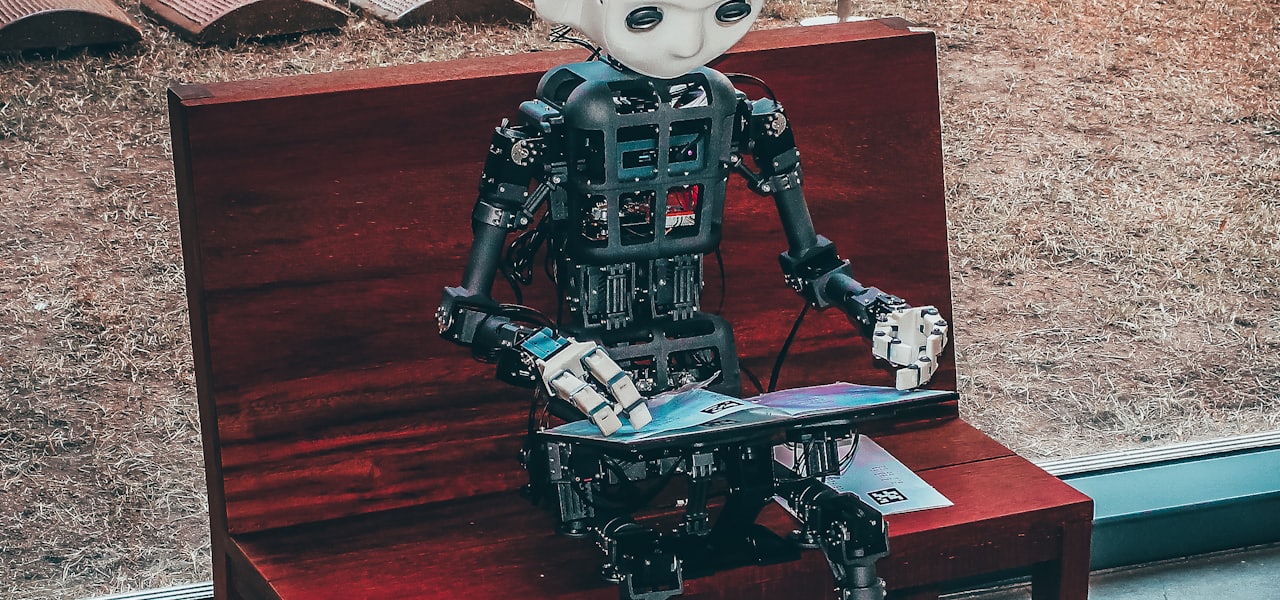
Netomi, formerly msg.ai, is an American artificial intelligence company and developer of chatbot technologies. == History == msg.ai was founded in May 2015 by Puneet Mehta. msg.ai worked with Sony Pictures to launch a chat bot on Facebook Messenger for a $100M film, Goosebumps and subsequently joined Y Combinator as a member of the Winter 2016 class. Later that year and in 2017, msg.ai completed two rounds of seed funding, led by Y Combinator and Index Ventures. In 2018, the company changed its name to Netomi. In 2019, the company raised $14.7 million in a Series A funding round also led by Index Ventures. In 2021, the company raised $30 million in a Series B funding round led by WndrCo LLC.
Surrogate model
A surrogate model is an engineering method used when an outcome of interest cannot be easily measured or computed, so an approximate mathematical model of the outcome is used instead. Most engineering design problems require experiments and/or simulations to evaluate design objective and constraint functions as a function of design variables. For example, in order to find the optimal airfoil shape for an aircraft wing, an engineer simulates the airflow around the wing for different shape variables (e.g., length, curvature, material, etc.). For many real-world problems, however, a single simulation can take many minutes, hours, or even days to complete. As a result, routine tasks such as design optimization, design space exploration, sensitivity analysis and "what-if" analysis become impossible since they require thousands or even millions of simulation evaluations. One way of alleviating this burden is by constructing approximation models, known as surrogate models, metamodels or emulators, that mimic the behavior of the simulation model as closely as possible while being computationally cheaper to evaluate. Surrogate models are constructed using a data-driven, bottom-up approach. The exact, inner working of the simulation code is not assumed to be known (or even understood), relying solely on the input-output behavior. A model is constructed based on modeling the response of the simulator to a limited number of intelligently chosen data points. This approach is also known as behavioral modeling or black-box modeling, though the terminology is not always consistent. When only a single design variable is involved, the process is known as curve fitting. Though using surrogate models in lieu of experiments and simulations in engineering design is more common, surrogate modeling may be used in many other areas of science where there are expensive experiments and/or function evaluations. == Goals == The scientific challenge of surrogate modeling is the generation of a surrogate that is as accurate as possible, using as few simulation evaluations as possible. The process comprises three major steps which may be interleaved iteratively: Sample selection (also known as sequential design, optimal experimental design (OED) or active learning) Construction of the surrogate model and optimizing the model parameters (i.e., bias-variance tradeoff) Appraisal of the accuracy of the surrogate. The accuracy of the surrogate depends on the number and location of samples (expensive experiments or simulations) in the design space. A systematic data representation during training can improve model scalability, thereby reducing the need for expensive simulations. Various design of experiments (DOE) techniques cater to different sources of errors, in particular, errors due to noise in the data or errors due to an improper surrogate model. == Types of surrogate models == Popular surrogate modeling approaches are: polynomial response surfaces; kriging; more generalized Bayesian approaches; gradient-enhanced kriging (GEK); radial basis function; support vector machines; space mapping; artificial neural networks and Bayesian networks. Other methods recently explored include Fourier surrogate modeling , random forests, convolutional neural networks, and generative adversarial networks. For some problems, the nature of the true function is not known a priori, and therefore it is not clear which surrogate model will be the most accurate one. In addition, there is no consensus on how to obtain the most reliable estimates of the accuracy of a given surrogate. Many other problems have known physics properties. In these cases, physics-based surrogates such as space-mapping based models are commonly used. == Invariance properties == Recently proposed comparison-based surrogate models (e.g., ranking support vector machines) for evolutionary algorithms, such as CMA-ES, allow preservation of some invariance properties of surrogate-assisted optimizers: Invariance with respect to monotonic transformations of the function (scaling) Invariance with respect to orthogonal transformations of the search space (rotation) == Applications == An important distinction can be made between two different applications of surrogate models: design optimization and design space approximation (also known as emulation). In surrogate model-based optimization, an initial surrogate is constructed using some of the available budgets of expensive experiments and/or simulations. The remaining experiments/simulations are run for designs which the surrogate model predicts may have promising performance. The process usually takes the form of the following search/update procedure. Initial sample selection (the experiments and/or simulations to be run) Construct surrogate model Search surrogate model (the model can be searched extensively, e.g., using a genetic algorithm, as it is cheap to evaluate) Run and update experiment/simulation at new location(s) found by search and add to sample Iterate steps 2 to 4 until out of time or design is "good enough" Depending on the type of surrogate used and the complexity of the problem, the process may converge on a local or global optimum, or perhaps none at all. In design space approximation, one is not interested in finding the optimal parameter vector, but rather in the global behavior of the system. Here the surrogate is tuned to mimic the underlying model as closely as needed over the complete design space. Such surrogates are a useful, cheap way to gain insight into the global behavior of the system. Optimization can still occur as a post-processing step, although with no update procedure (see above), the optimum found cannot be validated. == Surrogate modeling software == Surrogate Modeling Toolbox (SMT: https://github.com/SMTorg/smt) is a Python package that contains a collection of surrogate modeling methods, sampling techniques, and benchmarking functions. This package provides a library of surrogate models that is simple to use and facilitates the implementation of additional methods. SMT is different from existing surrogate modeling libraries because of its emphasis on derivatives, including training derivatives used for gradient-enhanced modeling, prediction derivatives, and derivatives with respect to the training data. It also includes new surrogate models that are not available elsewhere: kriging by partial-least squares reduction and energy-minimizing spline interpolation. Python library SAMBO Optimization supports sequential optimization with arbitrary models, with tree-based models and Gaussian process models built in. Surrogates.jl is a Julia packages which offers tools like random forests, radial basis methods and kriging. == Surrogate-Assisted Evolutionary Algorithms (SAEAs) == SAEAs are an advanced class of optimization techniques that integrate evolutionary algorithms (EAs) with surrogate models. In traditional EAs, evaluating the fitness of candidate solutions often requires computationally expensive simulations or experiments. SAEAs address this challenge by building a surrogate model, which is a computationally inexpensive approximation of the objective function or constraint functions. The surrogate model serves as a substitute for the actual evaluation process during the evolutionary search. It allows the algorithm to quickly estimate the fitness of new candidate solutions, thereby reducing the number of expensive evaluations needed. This significantly speeds up the optimization process, especially in cases where the objective function evaluations are time-consuming or resource-intensive. SAEAs typically involve three main steps: (1) building the surrogate model using a set of initial sampled data points, (2) performing the evolutionary search using the surrogate model to guide the selection, crossover, and mutation operations, and (3) periodically updating the surrogate model with new data points generated during the evolutionary process to improve its accuracy. By balancing exploration (searching new areas in the solution space) and exploitation (refining known promising areas), SAEAs can efficiently find high-quality solutions to complex optimization problems. They have been successfully applied in various fields, including engineering design, machine learning, and computational finance, where traditional optimization methods may struggle due to the high computational cost of fitness evaluations.
BREACH
BREACH (a backronym: Browser Reconnaissance and Exfiltration via Adaptive Compression of Hypertext) is a security vulnerability against HTTPS when using HTTP compression. BREACH is built based on the CRIME security exploit. BREACH was announced at the August 2013 Black Hat USA conference by security researchers Angelo Prado, Neal Harris and Yoel Gluck. == Details == While the CRIME attack was presented as a general attack that could work effectively against a large number of protocols, only exploits against SPDY request compression and TLS compression were demonstrated and largely mitigated in browsers and servers. The CRIME exploits against HTTP compression has not been mitigated at all, even though the authors of CRIME have warned that this vulnerability might be even more widespread than SPDY and TLS compression combined. BREACH is an instance of the CRIME attack against HTTP compression—the use of gzip or DEFLATE data compression algorithms via the content-encoding option within HTTP by many web browsers and servers. Given this compression oracle, the rest of the BREACH attack follows the same general lines as the CRIME exploit, by performing an initial blind brute-force search to guess a few bytes, followed by divide-and-conquer search to expand a correct guess to an arbitrarily large amount of content. == Mitigation == BREACH exploits the compression in the underlying HTTP protocol. Therefore, turning off TLS compression makes no difference to BREACH, which can still perform a chosen-plaintext attack against the HTTP payload. As a result, clients and servers are either forced to disable HTTP compression completely (thus reducing performance), or to adopt workarounds to try to foil BREACH in individual attack scenarios, such as using cross-site request forgery (CSRF) protection. Another suggested approach is to disable HTTP compression whenever the referrer header indicates a cross-site request, or when the header is not present. This approach allows effective mitigation of the attack without losing functionality, only incurring a performance penalty on affected requests. Another approach is to add padding at the TLS, HTTP header, or payload level. Around 2013–2014, there was an IETF draft proposal for a TLS extension for length-hiding padding that, in theory, could be used as a mitigation against this attack. It allows the actual length of the TLS payload to be disguised by the insertion of padding to round it up to a fixed set of lengths, or to randomize the external length, thereby decreasing the likelihood of detecting small changes in compression ratio that is the basis for the BREACH attack. However, this draft has since expired without further action. A very effective mitigation is HTB (Heal-the-BREACH) that adds random-sized padding to compressed data, providing some variance in the size of the output contents. This randomness delays BREACH from guessing the correct characters in the secret token by a factor of 500 (10-byte max) to 500,000 (100-byte max). HTB protects all websites and pages in the server with minimal CPU usage and minimal bandwidth increase.
Social media coverage of the Olympics
Over the years, television broadcast rights have distinguished what Olympic-related content can be accessed by fans online. By doing so, mobile-friendly social platforms began to integrate into the Olympics. Athletes and fans use these platforms to share live updates, special moments, and behind-the-scenes specials. Various social media platforms have been used for Olympic content, including Twitter and Facebook. Some marketers credit social media for prompting the official U.S. broadcasters, NBC, to live stream events, including early rounds. == Background == The Olympics is able to advertise to its viewers and its host country with the use of data it collects through Social media marketing. Prominent social media platforms include: Twitter, Facebook, Instagram, Tumblr, YouTube, Google, MSN, Yahoo and many more. Campaign Initiatives and Artificial Intelligence technologies have been used to analyze the social media content of users. Information from consumers such as their preferences, demographics, age and locality are all analyzed to gain consumer insight. Campaign initiatives and AI technologies were used for such purposes in the 2010 Vancouver Winter Olympics and are in use currently. Social media marketing of the Olympics is a new phenomena, beginning prior to the 2008 Beijing Olympics == Variations == There are two classifications of social media marketing recognized by the IOC: Officially sanctioned content from rights holders and sponsors that maximizes the use of Olympic content (imagery, hashtag) Unofficial content that is generated by brands that leverage the excitement of the Olympics == 2008 Beijing Summer Olympics == Social media marketing emerged as a phenomenon during the 2008 Beijing Olympics, which progressed as a marketing and an advertising tactic ever since. The Beijing Olympics became the test subject for social media marketing initiatives started by advertising agencies. In 2008, social media marketing began the transition from one-sided communication to mass communication of the Olympic Games. Although social media marketing of the Olympic Games began in 2008, the audience to the Olympics was still primarily reached through television–reaching an audience of 4.3 billion viewers. At the time, the viewers of the Olympic Games through Internet website platforms made up an audience of approximately 390 million individuals. What was the beginning of Olympic social media marketing, was also the beginning of a more globalized experience of the Olympic Games via social media. Twitter, now a prominent social media platform, began in 2006 and grew to three million active users by the beginning of the 2008 Beijing Olympics. Members of Facebook, another prominent social media platform, tracking the Olympic Games grew from approximately one million during the Olympic Games of Athens 2004 to 90 million during the 2008 Beijing Olympics. Social media use, in general, increased by 24 percent between 2007 and 2008–from 63 percent of U.S. adults to 87 percent of U.S. adults. == 2010 Vancouver Winter Olympics == The International Olympic Committee (IOC) deemed The Vancouver Winter Olympics as "the first social media games” based on its fan base through social media platforms. The IOC launched their Facebook page a month before the games began, attracting 1.5 million fans. Shifting to online viewing attracted a younger audience than past Olympic games with over 60 percent of Facebook fans being under 24 years of age. Athletes like Lindsey Vonn and Shaun White reached fans on social media as the platform posted behind-the-scenes coverage on their experiences. The IOC used social media to create competitions between athletes and fans streamed online. Its YouTube channel hosted a “Best of Us” challenge in which the public could compete in games with their favorite athletes, acquiring three million viewers. Photos spread across social media platforms, such as Flickr, which had 11,000 photos posted by 600 photographers, bringing a new perspective to the games. Twitter contributed constant live updates of the competitions. The IOC's Twitter following doubled to 12,000 followers during the Vancouver Olympics, creating a larger viewer population for the games. The IOC created social media guidelines as more athletes and fans got online to interact with the Olympics. Social media was still relatively new as a marketing platform, so these guidelines confused many individuals. == 2012 London Summer Olympics == The London 2012 Olympic Games succeeded in broadcasting, participation and marketing. For the first time, the IOC broadcast the Olympic Games live and on-demand through YouTube, allowing fans to access the Games anytime, anywhere through live streaming. The combination of conventional broadcasting and mobile platforms reached a global audience of 4.8 billion people. Social media soared with Facebook, Twitter and Google+, attracting 4.7 million followers. Athletes shared photographs, interacted online with fans and updated daily, either in person or via an agent. Instagram was established by 2012, making itself a premier photo-sharing platform perfect for athletes to capture their emotions. Lewis Wiltshire, head of sport for Twitter UK said, "Never before have fans had such direct access to their sporting heroes." Social media created conversation on fan opinions regarding athletes, including 962,756 total mentions of Usain Bolt, “Fastest Man in History,” who defended the 100 meter and 200 meter gold medals. Michael Phelps followed with 828,081 total mentions. Olympic sponsors were active on social media; created several campaigns to promote their brands; and inspired viewers with mass participation and personalized events. The Adidas “Take the Stage” Campaign recognized talent around the world, installing a photo booth and inviting the 550 Olympics athletes to take the stage. (IOC Marketing Report 2012). David Beckham surprised fans at the photo booth in Westfield shopping centre, gaining popularity in UK media. Coca-Cola, Acer Inc., McDonald's, Visa Inc. and several others used similar tactics of participation to attract viewers. == 2014 Sochi Winter Olympics == === Channels === The 2014 Winter Olympic Games were held in Sochi, a city in Krasnodar Krai, Russia, establishing the first “social media Olympics” for Russia. The most popular Russian social media and networking service, VK, created an Olympic page, similar to Facebook's. The Olympic VK page has 2.8 million fans and—the most popular official community on the platform. Throughout the games, VK had 54 million Olympic mentions, an average of 1.5 million per day. Numbers grew on other social media pages: more than 2 million fans joined the Olympic Facebook page, 168,101 followed the Olympic Twitter, 150,000 followed the Olympic Instagram and three million visited the Olympic website in February 2014. There were 90,000 total updates on social media by Sochi 2014 Olympians and teams. The United States was the most active country during the games logging 22,598 posts across Facebook, Twitter, and Instagram. === Engagement === With social media there is also hashtags. The most popular hashtag was #sochi2014 with almost 11,000 uses. The next top five hashtags were #wearewinter, #teamusa, #olympics, #goaus and #wirfuerD. Another popular hashtag was #Sochiproblems, depicting local struggles. Photos of the poor state of Sochi on all platforms made the games the number one trending topic one week before the opening ceremony. #SochiFail and #SochiProblems gave multiple reports of the poor living arrangements, incomplete construction, broken elevators, and polluted waters. This was one way that social media provided awareness to its users. === Media Perceptions === Media perceptions varied during the games; the Olympics was viewed as a confrontation between Eastern and Western Civilizations. The LGBT community took a stand against the games. Sponsors for the games including Coca-Cola, Mcdonald's, and P&G protested against Russian authorities and Russian anti-LGBT laws. Many protests took a stand against Russian laws, which created a discussion between human rights advocates. Advocates believed organizations should not promote certain values in western markets while supporting an anti-human rights government in another market. == 2016 Rio Summer Olympics == Social media marketing was an influential tool in the promotion and analysis of the 2016 Rio Olympics. Thomas Bach, President of the International Olympic Committee said that the power of sport demonstrates that diversity and interconnectedness can enlighten us all. With over 25,000+ sources of accredited media covering the games, the 2016 games were the most consumed Olympic games to date. Marketing for the Rio Olympics began in 2013 and ultimately lasted 3 years. There were 26 million visits to Olympic.org, the official website of the Olympic games, and over 7 billion views of official Olympic content on social media. There were o
NYSERNet
NYSERNet, Inc. (New York State Education and Research Network), is a non-profit Internet service provider in New York State. It mainly provides Internet access to universities, colleges, museums, health care facilities, primary and secondary schools, and research institutions. == History == NYSERNet was founded in 1986 in Troy, New York. Its founders compared NYSERNet's network with the Erie Canal and considered it the next step in two centuries to draw the country together. NYSERNet's network reaches from Buffalo to New York City. Completed in 1987, it was the first statewide regional IP network in the United States.[1] Initial speed of 56 kbps was upgraded to T1 in 1989 and T3 in 1994. It was the original assignee of AS174 according to RFC1117. This ASN is used today by Cogent Communications for their global network.
Confusion matrix
In machine learning, a confusion matrix, also known as error matrix, is a specific table layout that allows visualization of the performance of an algorithm, typically a supervised learning one. In unsupervised learning it is usually called a matching matrix. The term is used specifically in the problem of statistical classification. Each row of the matrix represents the instances in an actual class while each column represents the instances in a predicted class, or vice versa – both variants are found in the literature. The diagonal of the matrix therefore represents all instances that are correctly predicted. The name stems from the fact that it makes it easy to identify whether the system is confusing two classes (i.e., commonly mislabeling one class as another). The confusion matrix has its origins in human perceptual studies of auditory stimuli. It was adapted for machine learning studies and used by Frank Rosenblatt, among other early researchers, to compare human and machine classifications of visual (and later auditory) stimuli. It is a special kind of contingency table, with two dimensions ("actual" and "predicted"), and identical sets of "classes" in both dimensions (each combination of dimension and class is a variable in the contingency table). == Example == Given a sample of 12 individuals, 8 that have been diagnosed with cancer and 4 that are cancer-free, where individuals with cancer belong to class 1 (positive) and non-cancer individuals belong to class 0 (negative), we can display that data as follows: Assume that we have a classifier that distinguishes between individuals with and without cancer in some way, we can take the 12 individuals and run them through the classifier. The classifier then makes 9 accurate predictions and misses 3: 2 individuals with cancer wrongly predicted as being cancer-free (sample 1 and 2), and 1 person without cancer that is wrongly predicted to have cancer (sample 9). Notice, that if we compare the actual classification set to the predicted classification set, there are 4 different outcomes that could result in any particular column: The actual classification is positive and the predicted classification is positive (1,1). This is called a true positive result because the positive sample was correctly identified by the classifier. The actual classification is positive and the predicted classification is negative (1,0). This is called a false negative result because the positive sample is incorrectly identified by the classifier as being negative. The actual classification is negative and the predicted classification is positive (0,1). This is called a false positive result because the negative sample is incorrectly identified by the classifier as being positive. The actual classification is negative and the predicted classification is negative (0,0). This is called a true negative result because the negative sample gets correctly identified by the classifier. We can then perform the comparison between actual and predicted classifications and add this information to the table, making correct results appear in green so they are more easily identifiable. The template for any binary confusion matrix uses the four kinds of results discussed above (true positives, false negatives, false positives, and true negatives) along with the positive and negative classifications. The four outcomes can be formulated in a 2×2 confusion matrix, as follows: The color convention of the three data tables above were picked to match this confusion matrix, in order to easily differentiate the data. Now, we can simply total up each type of result, substitute into the template, and create a confusion matrix that will concisely summarize the results of testing the classifier: In this confusion matrix, of the 8 samples with cancer, the system judged that 2 were cancer-free, and of the 4 samples without cancer, it predicted that 1 did have cancer. All correct predictions are located in the diagonal of the table (highlighted in green), so it is easy to visually inspect the table for prediction errors, as values outside the diagonal will represent them. By summing up the 2 rows of the confusion matrix, one can also deduce the total number of positive (P) and negative (N) samples in the original dataset, i.e. P = T P + F N {\displaystyle P=TP+FN} and N = F P + T N {\displaystyle N=FP+TN} . == Table of confusion == In predictive analytics, a table of confusion (sometimes also called a confusion matrix) is a table with two rows and two columns that reports the number of true positives, false negatives, false positives, and true negatives. This allows more detailed analysis than simply observing the proportion of correct classifications (accuracy). Accuracy will yield misleading results if the data set is unbalanced; that is, when the numbers of observations in different classes vary greatly. For example, if there were 95 cancer samples and only 5 non-cancer samples in the data, a particular classifier might classify all the observations as having cancer. The overall accuracy would be 95%, but in more detail the classifier would have a 100% recognition rate (sensitivity) for the cancer class but a 0% recognition rate for the non-cancer class. F1 score is even more unreliable in such cases, and here would yield over 97.4%, whereas informedness removes such bias and yields 0 as the probability of an informed decision for any form of guessing (here always guessing cancer). According to Davide Chicco and Giuseppe Jurman, the most informative metric to evaluate a confusion matrix is the Matthews correlation coefficient (MCC). Other metrics can be included in a confusion matrix, each of them having their significance and use. Some researchers have argued that the confusion matrix, and the metrics derived from it, do not truly reflect a model's knowledge. In particular, the confusion matrix cannot show whether correct predictions were reached through sound reasoning or merely by chance (a problem known in philosophy as epistemic luck). It also does not capture situations where the facts used to make a prediction later change or turn out to be wrong (defeasibility). This means that while the confusion matrix is a useful tool for measuring classification performance, it may give an incomplete picture of a model’s true reliability. == Confusion matrices with more than two categories == Confusion matrix is not limited to binary classification and can be used in multi-class classifiers as well. The confusion matrices discussed above have only two conditions: positive and negative. For example, the table below summarizes communication of a whistled language between two speakers, with zero values omitted for clarity. == Confusion matrices in multi-label and soft-label classification == Confusion matrices are not limited to single-label classification (where only one class is present) or hard-label settings (where classes are either fully present, 1, or absent, 0). They can also be extended to Multi-label classification (where multiple classes can be predicted at once) and soft-label classification (where classes can be partially present). One such extension is the Transport-based Confusion Matrix (TCM), which builds on the theory of optimal transport and the principle of maximum entropy. TCM applies to single-label, multi-label, and soft-label settings. It retains the familiar structure of the standard confusion matrix: a square matrix sized by the number of classes, with diagonal entries indicating correct predictions and off-diagonal entries indicating confusion. In the single-label case, TCM is identical to the standard confusion matrix. TCM follows the same reasoning as the standard confusion matrix: if class A is overestimated (its predicted value is greater than its label value) and class B is underestimated (its predicted value is less than its label value), A is considered confused with B, and the entry (B, A) is increased. If a class is both predicted and present, it is correctly identified, and the diagonal entry (A, A) increases. Optimal transport and maximum entropy are used to determine the extent to which these entries are updated. TCM enables clearer comparison between predictions and labels in complex classification tasks, while maintaining a consistent matrix format across settings.
SocialIQ
Social IQ (formerly Soovox Inc.) was a San Diego-based influencer marketing platform that measured users' online social influence and connected them with brands for word-of-mouth marketing campaigns. The company was founded in 2009 by Akram Benmbarek and was headquartered in San Diego, California. == History == Akram Benmbarek, who had previously worked in technology finance at Advanced Equities Financial Corp and in wealth management at Morgan Stanley, Merrill Lynch, and UBS, founded the company in mid-2009 under the name Soovox. In October 2011, Benmbarek rebranded the company as SocialIQ. At that time, the company was seeking a Series A round of venture capital, having raised under $1 million in angel seed funding. == Similar metrics == Klout PeerIndex